Slot Themes vs. Visual Design: Key Differences
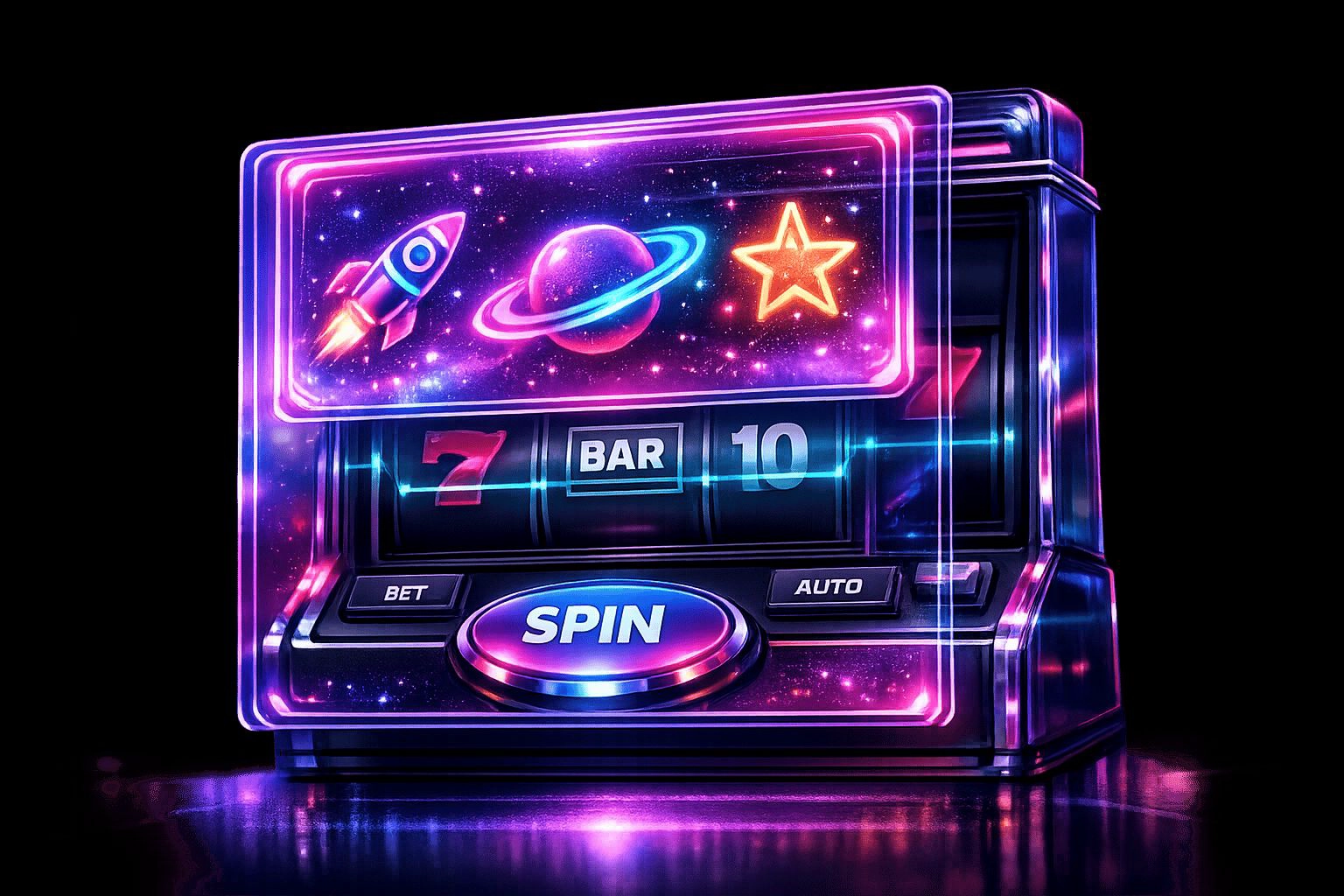
Slot Themes vs. Visual Design: Key Differences
Slot games are built on two core elements: themes and visual design. While they may seem similar, they serve distinct purposes.
- Themes: These define the game's story and mood, drawing players in by creating a world - be it ancient Egypt, pirate adventures, or futuristic cities. Themes evoke emotions and often hint at gameplay mechanics like volatility.
- Visual Design: This focuses on execution - graphics, animations, and user interface. It ensures the game looks polished, feels responsive, and keeps players engaged.
Key Takeaways:
- Themes attract: They grab attention in seconds with familiar or intriguing concepts.
- Visual design retains: High-quality visuals build trust and create an immersive experience.
- They complement each other: Themes set expectations, while visual design fulfills them, ensuring a seamless player experience.
By combining compelling themes with polished design, games not only engage players but also encourage longer play sessions.
TALKING SLOTS: Designs, Themes, Mechanics and More!
What Are Slot Themes?
A slot theme is what gives a game its personality. It’s the story, visuals, symbols, music, and overall vibe that shape the player's experience. Think of it as the world you step into when you hit "spin" - whether that’s uncovering treasures in an ancient Egyptian tomb, sailing the high seas with pirates, or navigating the glowing streets of a cyberpunk city.
Themes turn the spinning reels into something more engaging, creating a sense of adventure or mystery. For instance, a pirate-themed slot might feel like a treasure hunt, while a jungle-themed game could make you feel like an explorer in an ancient temple.
Different themes evoke different emotions. Horror-themed slots use chilling music and suspenseful effects to keep you on edge, while nature-inspired games rely on soothing visuals and sounds to create a relaxing atmosphere. As Gregory Williams explains:
"Themes are not just for decoration; they set the mood, guide the tone, and sometimes even change how we feel while spinning the reels".
In addition to creating an emotional connection, themes often make gameplay more intuitive, as explored in the next section.
The Purpose of Slot Themes
Slot themes do more than entertain - they connect with players on an emotional level. By tapping into familiar stories, whether it’s Greek mythology or the allure of luxury, themes keep players coming back for more.
Themes also help players quickly understand a game’s mechanics. For example, slots based on mythical stories often signal high volatility, while classic fruit machines tend to suggest lower volatility. This design allows players to choose games that suit their mood and risk preference without needing to read through detailed instructions.
Examples of Popular Slot Themes
Slot themes cover a wide range of styles and genres. Here are a few favorites:
- Classic or retro themes: These feature timeless icons like fruits, sevens, bars, and bells. They appeal to players who enjoy simple gameplay and quick, no-frills sessions.
- Mythology themes: Drawing from Greek, Norse, or Egyptian legends, these slots offer rich narratives and a sense of grandeur.
- Adventure themes: Whether it’s exploring jungles, pyramids, or pirate ships, these games spark curiosity and often lead to longer play sessions.
- Pop culture themes: Inspired by movies, TV shows, or music, these slots create instant recognition. For example, Wheel of Fortune has stayed popular for decades by incorporating familiar elements from the TV show.
- Horror and mystery themes: Vampires, haunted houses, and detectives add suspense and intrigue to the gameplay.
- Luxury themes: High-end symbols like yachts, sports cars, and jewels cater to players looking for a touch of extravagance.
New trends are also emerging. Futuristic themes, like cyberpunk or anime-inspired designs, appeal to younger, tech-savvy audiences. Developers are experimenting with AI-generated visuals and music to create fresh designs faster, while VR and AR technology takes immersion to the next level. Imagine walking through a haunted mansion or exploring outer space as part of the game.
What Is Visual Design in Slots?
Visual design is the magic combination of art and technology that gives slot games their personality through graphics, animations, and user-friendly interfaces. While the theme tells you what the game is about, the visual design decides how it looks, feels, and reacts to your actions. As Yuliia Stratulat from AAA Slot Game Development explains:
"Slot games thrive on visual appeal. Before a player ever interacts with paylines, bonuses, or mathematical models, the artwork defines their first impression".
Themes provide the narrative, but it’s the visual design that makes everything come alive. It’s what ensures the reels spin seamlessly, symbols light up during a win, and buttons feel intuitive to use. Without proper visual design, even the most interesting theme can fall flat.
Key Components of Visual Design
A slot’s visual design is made up of several essential elements that shape its overall look and feel:
- Symbols: These are the main icons on the reels, typically featuring 10 to 15 distinct designs. These range from low-value symbols like card ranks to high-value thematic characters, along with special symbols like Wilds and Scatters. To ensure clarity, especially on mobile screens, symbols are tested at 50–60% of their original size.
- Backgrounds and scenes: Multi-layered environments, lighting effects, and parallax scrolling create immersive depth and atmosphere.
- Animations: From the spin of the reels to celebratory effects during wins, animations act as the game's "emotional engine", adding excitement and energy to the experience.
- UI/UX design: This includes functional elements like buttons, credit meters, bet adjusters, and menus. These features must be easy to use and visually appealing without pulling attention away from the gameplay.
- Color schemes and lighting: Colors play a psychological role. For instance, red and gold suggest wealth and urgency, while blue and green promote a sense of calm and balance.
How Visual Design Affects Player Experience
A visually polished game builds instant trust. Players often associate detailed, high-quality artwork with a modern and credible gaming experience that’s worth their time. Visual design also simplifies the complex math behind the game by making it visually intuitive. For example, a richly detailed symbol with a unique frame instantly signals its value - no need for explanations.
Animations, meanwhile, create rhythm and excitement. The spin of the reels builds suspense, while effects like flashing lights and particle bursts make wins feel more satisfying. A well-thought-out UI ensures players can adjust bets or check balances effortlessly, maintaining the game’s flow. This is especially crucial on mobile devices, where screen space is at a premium. Together, these elements show how visual design works hand-in-hand with slot themes to keep players engaged.
Main Differences Between Slot Themes and Visual Design
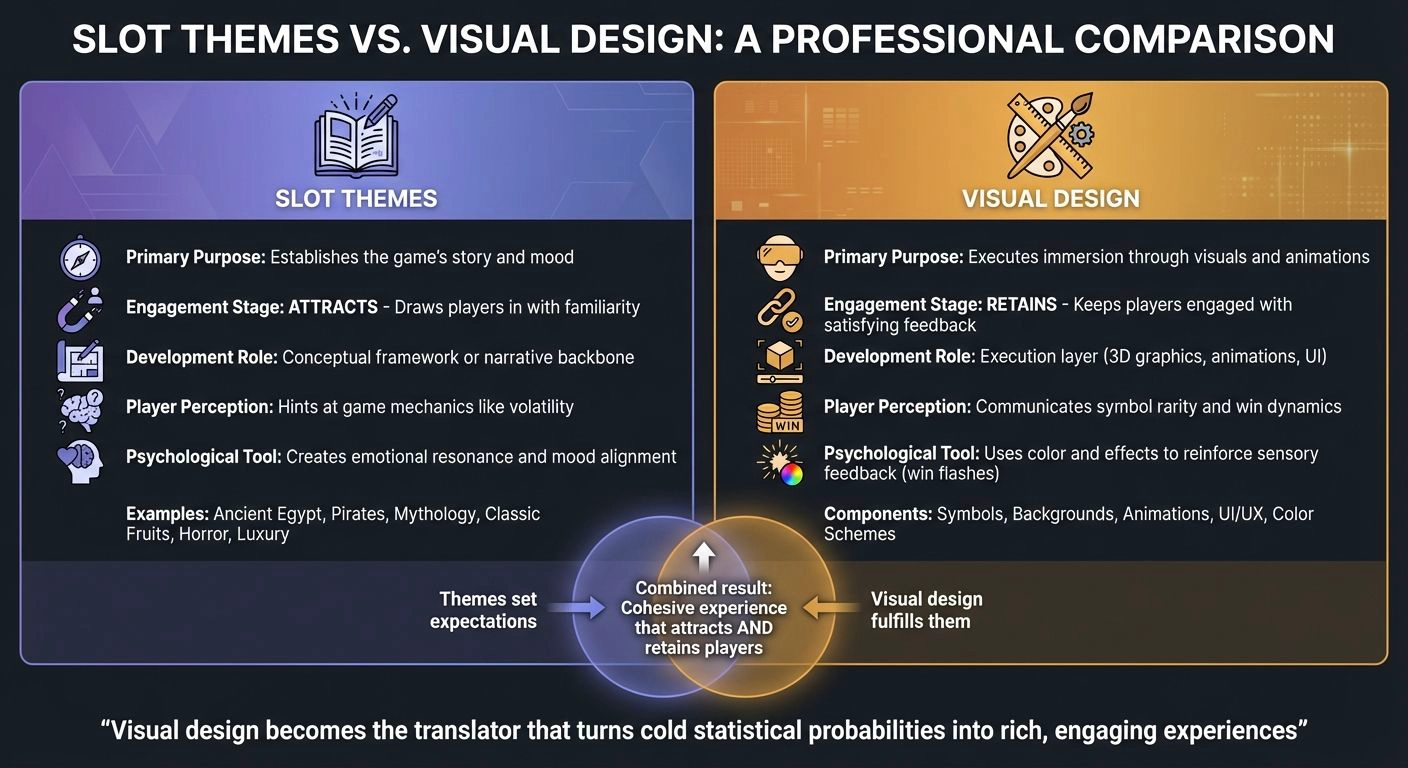
Slot Themes vs Visual Design: Key Differences Comparison
Slot themes and visual design might seem like they overlap, but they actually serve distinct roles in shaping the player's experience. The theme sets the story and emotional tone of the game, while visual design brings that story to life through graphics, animations, and interface elements.
The theme acts as the first hook - it’s the eye-catching element in the game lobby that makes a player think, "This looks interesting!" Visual design, on the other hand, ensures the game delivers on that promise by creating a polished, immersive experience. This division highlights how each contributes uniquely to the overall gameplay.
Themes also hint at the mechanics behind the game. For instance, a mythical theme might suggest high volatility with fewer but larger payouts, while a classic fruit theme could imply lower volatility with more frequent, smaller wins. Visual design reinforces these cues: large, bold symbols might signal high-value payouts, while dynamic effects amplify the excitement of a big win.
Comparison Table: Slot Themes vs. Visual Design
| Aspect | Slot Themes | Visual Design |
|---|---|---|
| Primary Purpose | Establishes the game’s story and mood | Executes immersion through visuals and animations |
| Engagement Stage | Attracts: Draws players in with familiarity | Retains: Keeps players engaged with satisfying feedback |
| Development Role | Conceptual framework or narrative backbone | Execution layer (e.g., 3D graphics, animations, UI) |
| Player Perception | Hints at game mechanics like volatility | Communicates symbol rarity and win dynamics |
| Psychological Tool | Creates emotional resonance and mood alignment | Uses color and effects to reinforce sensory feedback (e.g., win flashes) |
How They Work Together
When combined, slot themes and visual design create a cohesive experience that draws players in and keeps them engaged. The theme sets expectations - like the thrill of a treasure hunt - while visual design fulfills those expectations with dynamic animations, responsive symbols, and shifting backgrounds during bonus rounds.
This collaboration also builds trust. When the visuals align perfectly with the theme, players perceive the game as modern and well-made. But if the graphics feel mismatched - like cartoonish visuals in a game claiming to offer a serious historical adventure - players might question its quality and move on. As Yuliia Stratulat from AAA Slot Game Development explains:
"Visual design becomes the translator that turns cold statistical probabilities into rich, engaging experiences players want to return to again and again."
UI/UX design plays a quieter but equally important role. Subtle elements like well-placed buttons, meters, and menus - often referred to as "silent art" by industry professionals - help players stay focused on the reels without unnecessary distractions. Together, theme and visual design create a complete package that not only attracts players initially but also keeps them spinning for longer sessions.
How Slot Themes and Visual Design Drive Player Engagement
Themes draw players in, but visual design keeps them coming back. By examining how these elements work individually, we can better understand why certain games hold players' attention while others fail to make a lasting impression.
Attracting Players Through Themes
Themes are often the first thing players notice in a crowded game lobby. They act as a quick filter, helping players decide what to click on based on familiarity or emotional appeal. For example, classic fruit machine themes evoke simplicity and nostalgia, while mythology-inspired slots promise excitement and exploration. This instant recognition speeds up decision-making, moving players from browsing to playing in just seconds.
"Your game portfolio may be exceptionally rich, but only the right themes convert attention into play".
- Denis Kosinsky, Chief Operating Officer at NuxGame
Different themes can also hint at gameplay mechanics. Mythology-themed slots often suggest high volatility and treasure-hunting adventures, while fruit themes imply lower volatility with frequent, smaller wins. Additionally, tailoring themes to regional preferences - drawing from local folklore or art styles - can attract specific audiences in regulated markets.
While themes grab attention, it's the visual design that ensures players stick around.
Retaining Players Through Visual Quality
Once a theme hooks a player, the visual design determines whether they stay. High-quality graphics, fluid animations, and a user-friendly interface immediately build trust. Players are more likely to feel that a game is modern, polished, and worth their time. On the flip side, inconsistent or poorly executed visuals can make players question the game's overall quality, causing them to leave quickly.
Visual effects also play a key role in keeping players engaged. Features like flashing lights or particle bursts serve as psychological rewards, even during near-misses, encouraging players to continue. Color choices are equally important: red and gold create a sense of urgency and excitement, while blue and green tones provide a calming balance. When paired with animations and sound effects, these elements significantly enhance the overall gaming experience.
An intuitive interface is crucial, especially for mobile users where screen space is limited. Clear, well-designed symbols remain legible even at lower resolutions, ensuring players can easily navigate the game without frustration. This level of detail transforms visually appealing games into ones players return to repeatedly, solidifying their loyalty.
Slot Themes and Visual Design at Windice
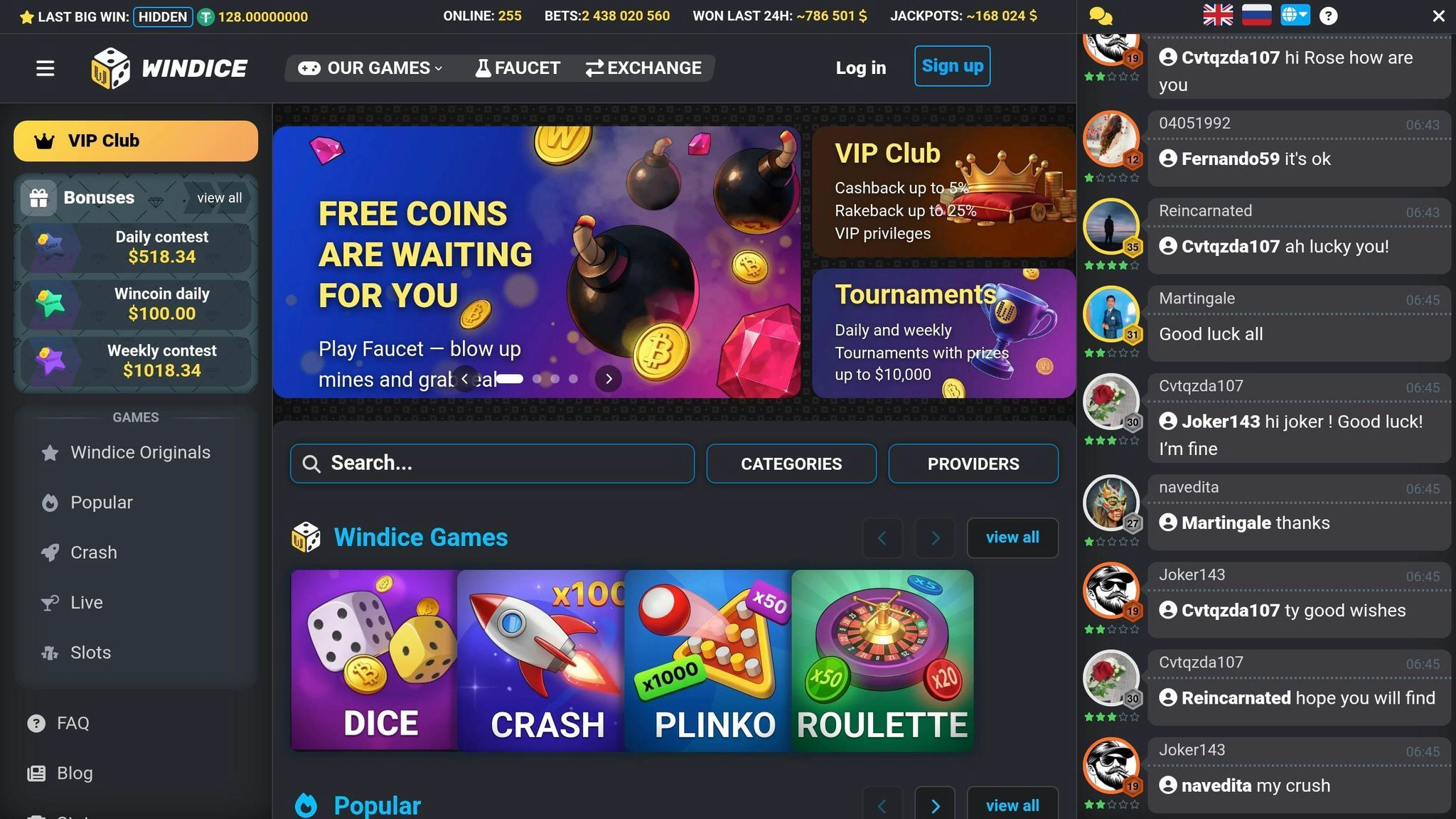
Themes and Visual Quality in Windice Games
Windice partners with top-tier providers like Pragmatic Play, Play'n GO, Evolution, and Playtech to deliver slots that combine engaging themes with visually stunning designs. These developers use cutting-edge techniques to turn simple mechanics into captivating experiences. For instance, a fishing-themed slot doesn’t just rely on fish symbols; it immerses players in an underwater setting, complete with bubbles, rippling water effects, and soothing marine sounds. It’s the kind of detail that grabs attention right away.
"The design is the message. In those flashing lights, spins, and sound chimes, inherited intuitiveness is easily found."
- Wayne Delaney
Windice ensures that its slots maintain exceptional visual quality on both desktop and mobile devices. High-definition 3D graphics and smooth animations look sharp and vibrant, no matter the screen size. Even the use of color is intentional: red tones often bring an adrenaline rush in high-volatility games, while calming blues create a more laid-back atmosphere in relaxed slots. This attention to detail guarantees a polished and immersive experience for players.
While these themes and visuals lay the foundation, Windice enhances the overall experience with strong community and VIP features.
Community and VIP Features That Improve the Slot Experience
Windice goes beyond visuals to elevate gameplay through community-driven and VIP-focused features. The platform’s built-in chat system transforms a solo gaming session into a lively social experience. Players can celebrate big wins together, discuss their favorite slots, or engage in features like rain/tips while spinning the reels, adding a fun, interactive layer to the game.
The VIP program, structured across six levels, adds another dimension to the player experience. With perks like cashback, rakeback, and exclusive rewards, the system keeps players engaged by rewarding their loyalty. Every spin earns points, creating a sense of progression that complements the themed gameplay. Combine this with instant cryptocurrency payouts - available in Bitcoin, Ethereum, and other digital currencies - and Windice delivers both excitement and convenience.
To top it off, players can personalize their experience through the integrated goods market, where they can customize avatars and chat decorations to match their favorite slot themes. This feature extends the thematic immersion beyond the games themselves, tying the visual and social elements together seamlessly.
Conclusion
The connection between slot themes and visual design forms the backbone of the gaming experience. Themes act as the emotional hook, turning each spin into a mini-story. Meanwhile, visual design adds depth to that story, using sharp graphics, fluid animations, and intuitive interfaces to immerse players. As Yuliia Stratulat from AAA Slot Game Development puts it:
"Visual design becomes the translator that turns cold statistical probabilities into rich, engaging experiences players want to return to again and again".
This collaboration is what sets unforgettable slots apart from the rest. A well-crafted theme grabs attention in seconds - often before players even consider paylines or RTP. Once engaged, high-quality visual design builds trust and keeps players coming back, offering a satisfying sensory experience with every spin.
This blend of theme and design not only shapes modern slot games but also drives industry innovation. For platforms like Windice, this partnership is key to delivering a standout gaming experience. By collaborating with top developers like Pragmatic Play, Play'n GO, and Evolution, Windice ensures its slot catalog consistently pairs engaging themes with top-tier visuals. Beyond the reels, Windice enhances player interaction with features like active chat, VIP rewards, and profile customization, creating a community-focused environment.
Recognizing the roles of themes and visual design helps both players and developers understand what makes today’s slots so captivating. Themes set the tone, hinting at the game’s pace and volatility, while visual design brings it all to life with realism and emotional resonance. Together, they create an experience that feels "fair, exciting, and alive", keeping players engaged spin after spin.
FAQs
Can a great theme still feel boring with weak visuals?
Yes, even the best theme can fall flat if the visuals don’t deliver. High-quality graphics, smooth animations, and eye-catching effects play a huge role in making the experience immersive. Weak visuals can drain the energy from a game, leaving it feeling unappealing. On the flip side, bold, dynamic designs can amplify the theme’s appeal, drawing players in and keeping them hooked. To truly create an enjoyable gameplay experience, you need both a strong theme and visuals that bring it to life.
Do themes predict volatility or payouts?
Themes in slot games might not directly influence volatility or payouts, but they can sometimes hint at gameplay styles. For instance, darker themes often pair with high-risk, high-reward setups, while brighter, more cheerful themes might lean toward lower volatility, offering frequent but smaller wins. That said, the real factors behind volatility and payouts lie in the game’s mechanics. Themes and visuals mainly serve to boost engagement and add a layer of storytelling to the experience.
What visual design details matter most on mobile?
On mobile devices, visual design revolves around clarity, simplicity, and usability. This means creating interfaces that are intuitive and easy to navigate. For example, thumb-friendly controls like large, tappable buttons for actions such as 'Spin' and 'Bet' make interaction seamless. High-contrast visuals improve readability, even in varying lighting conditions. Clean, uncluttered layouts help users focus, while subtle animations and feedback - like a gentle vibration or a visual cue - enhance engagement without overpowering the small screen. The goal is to deliver a smooth, enjoyable experience tailored for mobile use.